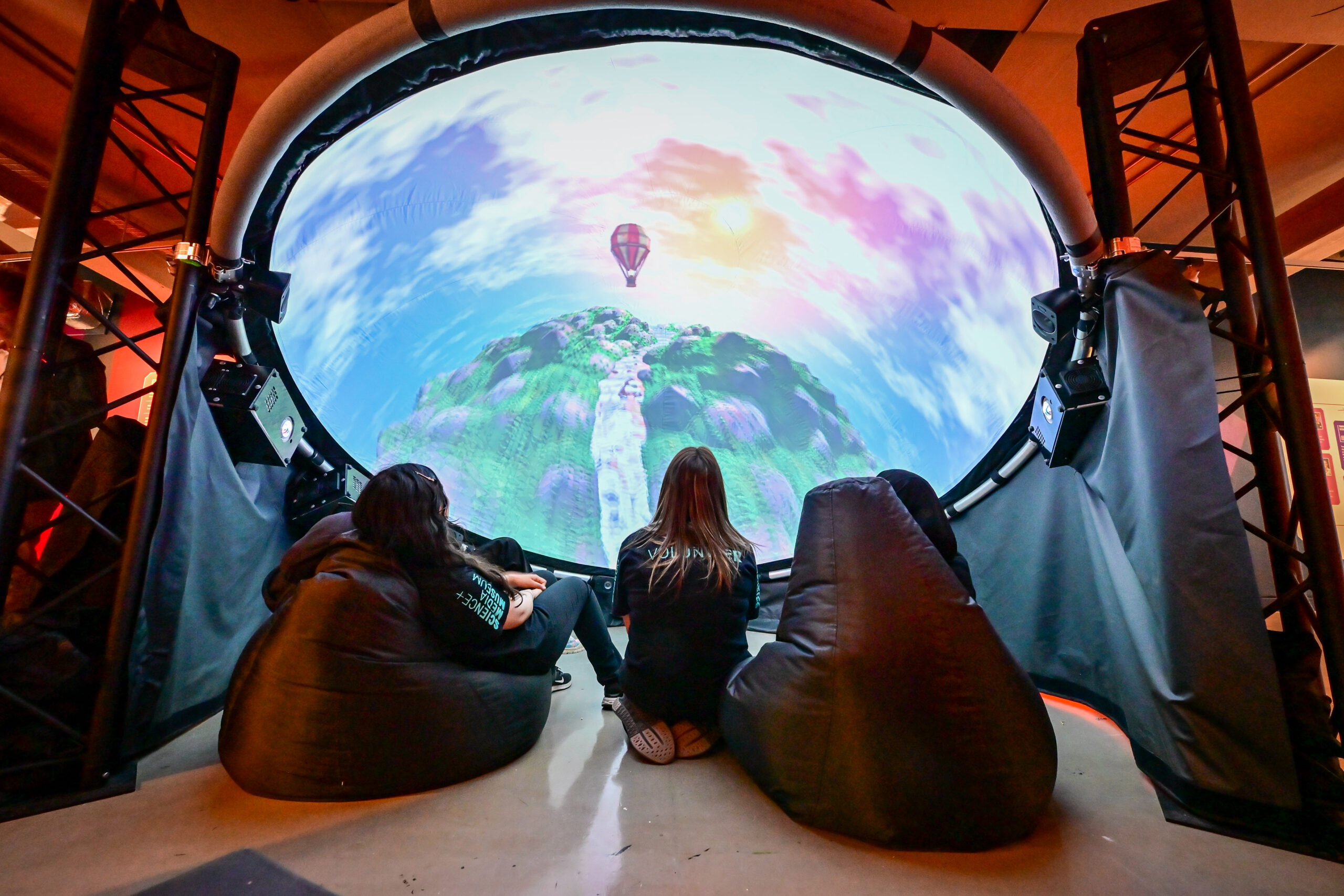
A pioneering project in Bradford has reached more than 1,800 students across six schools – building digital skills, confidence and aspirations for future careers in the creative industries.
Bradford Digital Creatives, a two-year pilot delivered by Born in Bradford and the National Science and Media Museum, has published its final report detailing the project’s transformative impact. Backed by Arts Council England, Bradford 2025 UK City of Culture and Bradford Council, the initiative engaged secondary school students from Carlton Bolling, Belle Vue Girls’ Academy, Carlton Keighley, Dixons Allerton, Bradford AP Academy and Appleton Academy to co-create artwork with professional artists, including 360° film-making, soundscape recording, light art, Virtual Reality, and games design. Artwork produced was showcased in the Reel BFD: Digital Arts, Bradford Stories exhibition at the National Science and Media Museum this summer, in participating schools, and even at the iconic Jodrell Bank planetarium.
Key findings show:
- Over half of participants reported increased interest in digital arts
- 7 in 10 reported they gained new knowledge and developed new creative skills
- 1 in 3 said they would be likely to look for digital arts activities to attend in the future
- Students were significantly more likely to consider creative careers after participating.
- Teachers reported increased confidence in using digital tools, with 90% saying the project was valuable for their students.
Lindsay Wilson, Deputy Headteacher at Carlton Bolling, said:
“Over the past year, I’ve watched something special unfold – a transformation in our students, our staff, and our whole school community. I saw students discover talents they didn’t even know they had – and the changes were more than just creative. I watched confidence grow – and I saw students who have never spoken to each other, working together. They were suddenly collaborating, sharing ideas, and encouraging each other. One of the highlights was seeing parents enthused and excited, talking to their children about careers in digital creative industries after seeing their work.
“Personally, it’s made me think differently about how we use technology in the classroom and school – not just as a tool for learning, but as a way to inspire and connect. We’ve gained ideas and approaches we’ll carry forward in our teaching long after the project ends.
Sally Folkard, Head of Screen and Cultural Engagement at the National Science and Media Museum, said:
“The success stories coming out of Bradford Digital Creatives are nothing short of inspiring – from a 14-year-old becoming a BAFTA Young Game Designers finalist after being inspired in a workshop, to Carlton Keighley launching its own student-led Games Design Club, and students uncovering talents that have shaped their future education choices. We also saw artists re-energised by the creativity and curiosity of the classroom – rediscovering the joy of their own practice through the eyes of a new generation. This mutual exchange is what made the project so powerful: it wasn’t just about delivering workshops, but about sharing experiences, building confidence, and forging sustainable relationships between education and culture.”
The project also forms part of the internationally significant Age of Wonder study, led by Born in Bradford – marking the first time creativity has been measured at this scale in relation to adolescent health and wellbeing.
Professor Rosie McEachan, Director at Born in Bradford, said:
“We’ve long known that creativity is vital to young people’s development, but this is the first time we’ve been able to track its impact through such a robust research lens. Bradford Digital Creatives has shown that when you give young people the tools and support to express themselves, the results are extraordinary – not just creatively, but in terms of confidence, wellbeing and future ambition.”
Rhiannon Hannon, Director of Creative Engagement and Participation at Bradford 2025, added:
“This project is exactly what Bradford 2025 is about – empowering young people to tell their stories, try new things, and see a future for themselves in the creative industries. By embedding cultural experiences in schools and working with incredible digital artists, Bradford Digital Creatives has opened up new possibilities for hundreds of students across our district.”
Wilson added:
“This project has set the bar for what creative education can be – collaborative, inclusive, and transformative. It showed us what’s possible when we give young people the space, support, and freedom to explore.”
With backing secured to extend delivery until March 2026, the project’s partners are now looking to develop a long-term model to embed digital creativity across more schools in Bradford – strengthening connections between education, culture and industry and laying the groundwork for a thriving creative future for the district’s young people.
Read the Bradford Digital Creatives Impact Report here
Notes for editors:
- For more information about Bradford Digital Creatives, visit: www.scienceandmediamuseum.org.uk/digitalcreatives
- To read more stories from the project, visit: https://blog.scienceandmediamuseum.org.uk/tag/bradford-digital-creatives/
- For media enquiries, please contact Aimee Philipson: aimee.philipson@scienceandmediamuseum.org.uk
- Schools interested in participating in the extension should contact sally.folkard@scienceandmediamuseum.org.uk
About the National Science and Media Museum
The National Science and Media Museum in Bradford, West Yorkshire, opened in 1983, and has since become one of the most visited UK museums outside London. It draws on more than three million objects from its national collection to explore the science and culture of image and sound technologies, and their impact on our lives.
The museum creates special exhibitions, interactive galleries and activities for families and adults, and is home to Pictureville, Yorkshire’s biggest independent cinema with three screens including Europe’s first IMAX and the one of two public Cinerama venues in the world.
The National Science and Media Museum reopened on 8 January 2025, following a £6m once in a generation transformation. The museum is open seven days a week, from 10.00–17.00. For more information and to book tickets, please visit the website.
About Born in Bradford (Age of Wonder)
Born in Bradford is one of the largest research studies in the World, tracking the lives of over 30,000 Bradfordians to find out what influences the health and wellbeing of families. We use our findings to develop new and practical ways to work with families and health professionals to improve the health and wellbeing of our communities.
Born in Bradford’s Age of Wonder is the biggest and most exciting research study of young people in the world. BiB Age of Wonder is a seven-year project capturing the journey through adolescence and adulthood for all teenagers in Bradford. They work in partnership with secondary schools and young people across the district to create a detailed picture of every aspect of what it’s like to grow up in Bradford.
About Bradford 2025 City of Culture
Bradford 2025 UK City of Culture (Bradford 2025) takes place from January 2025 to December 2025, and is a celebration of Bradford city and district, taking place across its city, towns, villages and moorlands. With 29% of the district’s population under 20, youth culture runs throughout Bradford 2025, representing the ideas, fashion, music and culture of the UK’s new generation and supporting them to develop new skills, begin new careers and to be inspired.
About City of Bradford Metropolitan Council
Bradford Council is the public sector organisation responsible for a range of services which benefit people living in the Bradford district. The council’s Culture, Policy and Events Team lead the cultural programme of events and festivals, development of cultural partnerships, and arts, culture and heritage grants programmes. The Council is an integral partner in the delivery of Bradford 2025 UK City of Culture.
